Top Teams Don’t Skip This
Elite military and sports teams swear by one practice to keep learning and improving: a strong debrief culture. Here’s how to build one.
By Kenny Bhosale, CEO & Founder, The Bridge Leaders · 13 March 2025 · 4 min read
- Elite military and sports teams build a culture of debrief, after every mission, success or failure.
- Two ingredients make it work: consistency, and a no-ego, no-blame environment.
- Short, frequent “hot” debriefs beat long lessons-learned meetings.
- Use five questions, and never skip the last: what will we do differently?
We don’t talk about this enough, but every high-performing team swears by it. Elite military and sports teams don’t just train hard; they’re constantly learning and pursuing excellence. And there’s one critical element they excel at: a strong debrief culture. Let’s break it down, and I’ll share a simple debrief format you can use straight away.
LearnBuild a culture of debrief
Imagine this: someone leaves or joins your team every three months. Your key leaders are replaced every year, priorities shift constantly, every day brings a new challenge, and change, uncertainty and ambiguity are the norm. Sounds stressful, right? Yet this is exactly the environment elite military units operate and thrive in. For decades, they’ve embedded one of the most powerful tools for team performance: the debrief.
We used this tool countless times in my 18-year military career to drive high-performing teams. After every mission or major task, success or failure, we’d break down what went well, what went wrong and what to do differently next time. In business, we often skip this step. We rush from one task to the next without pausing to reflect, and in doing so we deprive our people of real learning opportunities.
But a debrief culture is more than making time and asking questions. That part is easy. What sets elite teams apart is that they build a culture of debrief, which needs two key ingredients: consistency and a no-blame environment.
First, debriefs only work if they’re done regularly and on time, after every major task or event. Short, frequent five-minute stand-up “hot” debriefs beat a long-winded lessons-learned meeting. Second, it absolutely needs a no-ego, no-blame environment: just raw honesty and a relentless focus on improving. Otherwise a debrief becomes a meaningless box-ticking exercise. That tone starts with you, as the leader, leading by example.
ReflectExperience isn’t enough
“We do not learn from experience. We learn from reflecting on experience.”John Dewey
If you’ve been through our leadership training or coaching, you’ll know this is a core principle: experience alone means nothing, and it certainly doesn’t result in wisdom, unless you take time to reflect and learn. Yet in today’s fast-paced workplaces, that’s exactly what we don’t do.
SmileToo busy to debrief?
Too busy to debrief? Don’t stress about it.
You’ll get another chance when you repeat the same mistake next week! 😂
Do itRun a five-question hot debrief
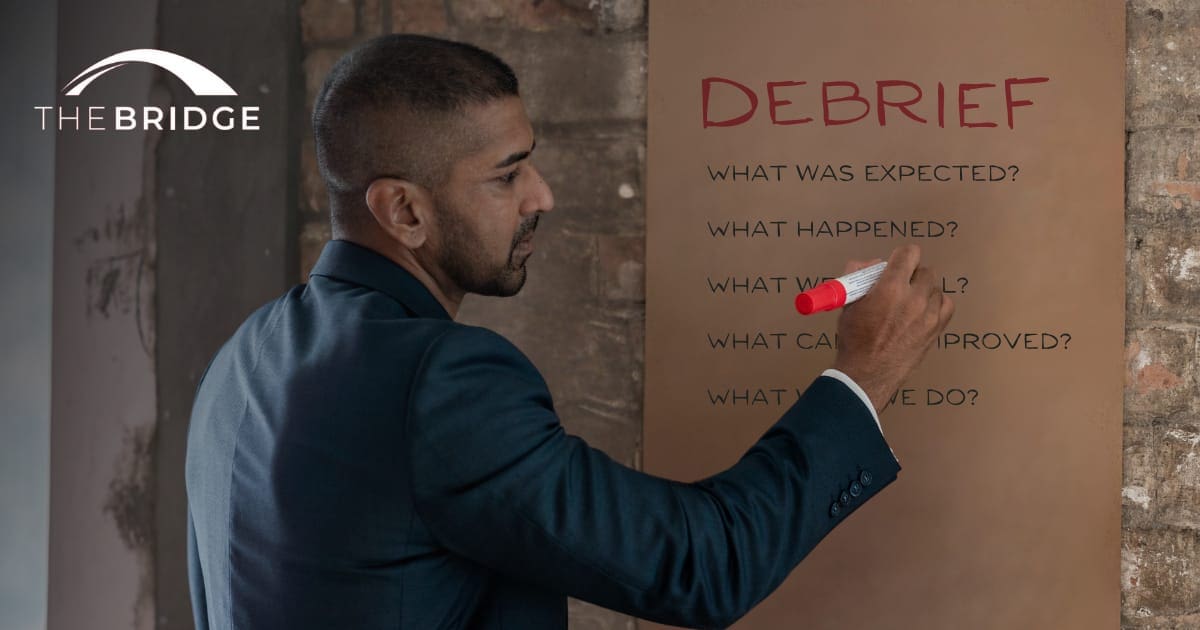
Try a hot debrief with your own team using this quick-fire format. Number five is the most important; without it, it’s just a talkfest with no tangible actions.
- What was expected to happen?
- What actually happened?
- What went well, and why?
- What can be improved, and how?
- What will we do differently?
Tip: you don’t have to lead every debrief yourself. Let a team member facilitate it.
Kia pai tō wiki,Kenny
Leaders often askQuestions about this
What is a hot debrief?
A short, five-minute stand-up review done straight after a task or event, while it’s fresh. It beats a long-winded lessons-learned meeting held weeks later.
What questions should a team debrief cover?
What was expected to happen? What actually happened? What went well, and why? What can be improved, and how? What will we do differently? The last one turns talk into action.
How do you make debriefs safe?
Keep them no-ego and no-blame, with raw honesty and a focus on improving. That tone starts with the leader, and you can let team members facilitate.

About Kenny Bhosale
Kenny is the CEO and founder of The Bridge Leaders. He spent 18 years in the New Zealand Defence Force, including as Head of the Royal New Zealand Navy Leadership Training School, and has coached leaders for more than 4,000 hours, from CEOs to first-time managers. He is an ICF Professional Certified Coach (PCC).
One idea a week on leading people. Read it or listen.
Leadership Unplugged lands every Thursday: a six-minute read or listen, no fluff. Or if your leaders are wrestling with this right now, let’s talk.
Want your team working better together? See our team development workshops.
Want to read more? The full Leadership Unplugged archive lives on our newsletter site.